Level 5Usually Grades 9–10
Advanced Engineering Pathways
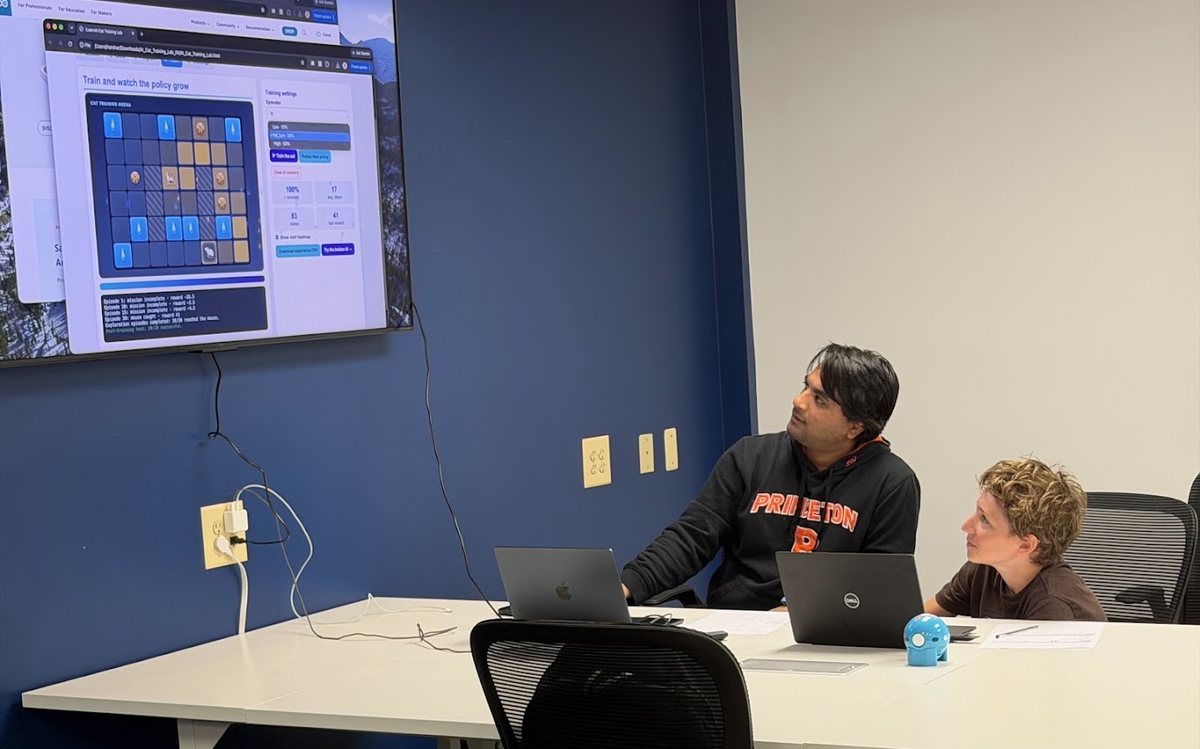
Level goal: Build deeper engineering skills through a shared foundation plus one chosen pathway: AI & Machine Learning, Robotics & Autonomous Systems, or Software with Applied AI.
What students learn
- Make programs faster and more efficient, and explain why.
- Design experiments around baselines, metrics and failure cases.
- Build systems that test, log and recover from predictable failures.
- Think through privacy, safety and when a human should approve.
- Measure quality, reliability, speed and cost, or physical performance.
- Explain engineering choices using evidence.
- Go deep in one chosen pathway instead of trying every advanced tool.
Typical tools
Python, Git, evaluation and deployment practicesPyTorchHugging FaceOpenCVDockerWeb frameworksRobotics hardware or simulationCloud tools
How the level is organized
Shared · 24 sessionsEngineering FoundationProject: Engineering and evaluation foundationSkills: Testing, evaluation, safety and documentation
Path A · 48 sessionsAI & Machine LearningProject: AI/ML systemSkills: Models, grounded AI and measurable evaluation
Path B · 48 sessionsRobotics & Autonomous SystemsProject: Robotics or autonomous systemSkills: Sensing, perception, control and repeated trials
Path C · 48 sessionsSoftware with Applied AIProject: Software and applied AI productSkills: User-facing software and safe AI integration
Students start with the shared foundation, then choose one pathway. Pathway options can depend on group size, and we confirm them at placement.
Level 6Usually Grades 11–12
Advanced Engineering & Research
Level goal: Ask focused questions, learn from and compare published work, run careful experiments, build advanced systems responsibly, and explain both results and limits.
What students learn
- Use statistics, uncertainty and experimental design.
- Read research papers and pick out the claim, method, data and limits.
- Reproduce a scoped result under controlled conditions.
- Try and adapt modern AI models, where it fits the project.
- Design advanced AI, robotics or software systems with measurable evaluation and human oversight.
- Stress-test systems for failures, privacy and security issues.
- Work on an independent research-style or engineering project.
- Build a portfolio, and try contributing to an open-source project.
Typical tools
PythonNumPy / SciPyPyTorch / Hugging FaceResearch toolingPathway robotics, software or agent toolsReproducibility and technical-writing tools
Level roadmap Four units, about nine weeks each
Unit 1Reproduction / FoundationsProject: Reproduction or benchmark studySkills: Research reading and reproducibility
Unit 2Question + PilotProject: Proposal and pilot experimentSkills: Method, safety and baseline
Unit 3Build & Test SprintProject: Draft report, code or advanced systemSkills: Experiments, feedback and revision
Unit 4Final Project + PresentationProject: Research or engineering capstoneSkills: Clear documentation, honest limits and a presentation
Levels 5 and 6 pair a shared foundation with one chosen pathway, so students go deep in one area. No one is expected to learn every advanced tool.